About Us
About Us
About Us
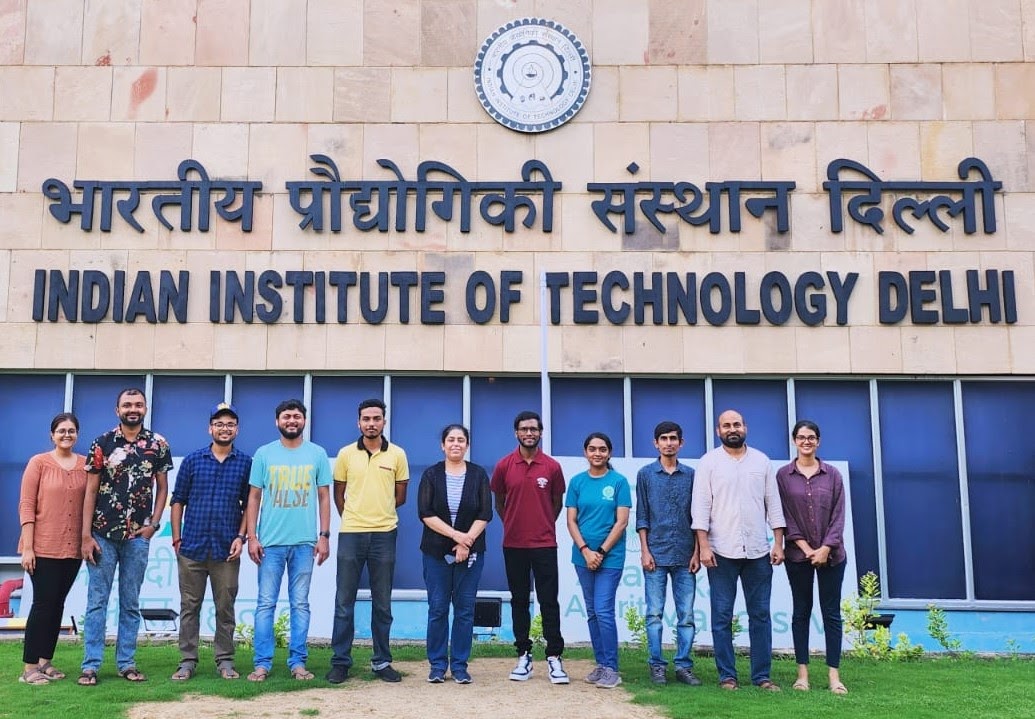
Prof. Nebhani's Group
Dr. Nebhani's research group (Surface and Macromolecular Chemistry Laboratory) at the Department of Materials Science and Engineering at IITD is focused on synthesizing hybrid functionalized porous materials.
Dr. Nebhani's research group (Surface and Macromolecular Chemistry Laboratory) at the Department of Materials Science and Engineering at IITD is focused on synthesizing hybrid functionalized porous materials.
Dr. Nebhani's research group (Surface and Macromolecular Chemistry Laboratory) at the Department of Materials Science and Engineering at IITD is focused on synthesizing hybrid functionalized porous materials.
The aim is to obtain hybrid functionalized materials with engineered physicochemical properties using orthogonal and controlled polymerization techniques. Her group has worked extensively on engineered materials based on silica.
The aim is to obtain hybrid functionalized materials with engineered physicochemical properties using orthogonal and controlled polymerization techniques. Her group has worked extensively on engineered materials based on silica.
The aim is to obtain hybrid functionalized materials with engineered physicochemical properties using orthogonal and controlled polymerization techniques. Her group has worked extensively on engineered materials based on silica.
Another important area of the research is to develop engineered materials from polybenzoxazine, a class of advanced thermosetting resins. Her group has developed new approaches to immobilize benzoxazine monomers from the surface of silica, aiding in better dispersion to silica, while preparing composites using polybenzoxazine and silica. Her group has developed multifunctional polybenzoxazines which are interesting materials in high-temperature adhesives. Because of the molecular design flexibility, these multifunctional polybenzoxazines are an important precursor for the synthesis of heteroatom-doped carbon materials as well as reprocessable thermosets.
Another important area of the research is to develop engineered materials from polybenzoxazine, a class of advanced thermosetting resins. Her group has developed new approaches to immobilize benzoxazine monomers from the surface of silica, aiding in better dispersion to silica, while preparing composites using polybenzoxazine and silica. Her group has developed multifunctional polybenzoxazines which are interesting materials in high-temperature adhesives. Because of the molecular design flexibility, these multifunctional polybenzoxazines are an important precursor for the synthesis of heteroatom-doped carbon materials as well as reprocessable thermosets.
Another important area of the research is to develop engineered materials from polybenzoxazine, a class of advanced thermosetting resins. Her group has developed new approaches to immobilize benzoxazine monomers from the surface of silica, aiding in better dispersion to silica, while preparing composites using polybenzoxazine and silica. Her group has developed multifunctional polybenzoxazines which are interesting materials in high-temperature adhesives. Because of the molecular design flexibility, these multifunctional polybenzoxazines are an important precursor for the synthesis of heteroatom-doped carbon materials as well as reprocessable thermosets.
Prof. Karra's Group
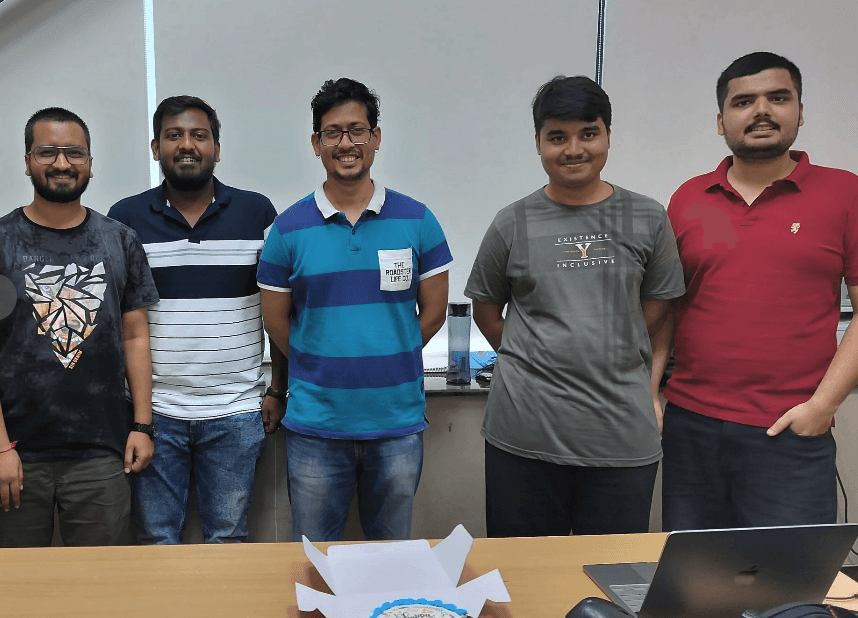
Prof. Karra’s team focuses on both fundamental and applied research, aiming to understand and model the electrochemical and mechanical behavior of advanced materials to enhance the performance and reliability of energy systems. Their research emphasizes the development of thermodynamically consistent variational theories to uncover the microstructure-property relationships in materials utilized for energy storage, conversion, and structural applications. By employing state-of-the-art computational techniques—including phase-field modeling, thermodynamic and kinetic databases, finite element, and finite volume analysis—they investigate the microstructural evolution of materials. This approach allows them to optimize material properties under various thermal, electromagnetic, mechanical, and chemical stimuli.
Prof. Karra’s team focuses on both fundamental and applied research, aiming to understand and model the electrochemical and mechanical behavior of advanced materials to enhance the performance and reliability of energy systems. Their research emphasizes the development of thermodynamically consistent variational theories to uncover the microstructure-property relationships in materials utilized for energy storage, conversion, and structural applications. By employing state-of-the-art computational techniques—including phase-field modeling, thermodynamic and kinetic databases, finite element, and finite volume analysis—they investigate the microstructural evolution of materials. This approach allows them to optimize material properties under various thermal, electromagnetic, mechanical, and chemical stimuli.
Prof. Karra’s team focuses on both fundamental and applied research, aiming to understand and model the electrochemical and mechanical behavior of advanced materials to enhance the performance and reliability of energy systems. Their research emphasizes the development of thermodynamically consistent variational theories to uncover the microstructure-property relationships in materials utilized for energy storage, conversion, and structural applications. By employing state-of-the-art computational techniques—including phase-field modeling, thermodynamic and kinetic databases, finite element, and finite volume analysis—they investigate the microstructural evolution of materials. This approach allows them to optimize material properties under various thermal, electromagnetic, mechanical, and chemical stimuli.
© Department of Materials Science and Technology, IIT Delhi
© Department of Materials Science and Engineering, IIT Delhi